The 7 Forms Every Service Manager Should Standardize First
A five-technician service department usually doesn't have a paperwork problem. It has a consistency problem — and that's precisely what CDOS is built to solve.
How a small service department creates consistency without more bureaucracy
A service department with five technicians doesn't feel like a complicated business. You've got a service manager. Maybe one or two advisors. Five technicians. A parts counter nearby. Cars or trucks coming through the door every morning. Everybody knows everybody.
And that's precisely why important processes can slowly become informal.
One advisor documents everything. Another remembers most of it. One technician takes pictures. Another tells the advisor what he found. One customer gets called at noon. Another wonders at 4:30 whether the vehicle has even been looked at.
Nothing seems seriously wrong — until something goes wrong. A customer disputes an additional repair. A vehicle comes back. A technician says, “Nobody told me.” An advisor says, “I thought we had approval.” A customer says, “That's not what I was told.”
Suddenly the manager is trying to reconstruct yesterday from repair orders, text messages, conversations and memory. That's the problem standardization solves. And you don't need 100 forms to start. For a small five-technician operation, start with seven.
The CDOS approach: Process → Procedure → Reference
Centennial Dealership Operating System is built around a deliberately simple idea:
- Process — What are we trying to accomplish?
- Procedure — How should we consistently do it?
- Reference — What form, checklist, SOP or record supports it?
The form isn't the process. It's the reference that proves and supports the process. That's an important distinction. So instead of handing your team another stack of paperwork, let's look at seven moments in the service day where a simple reference can prevent confusion.
1. Vehicle Check-In & Service Authorization
Process: Understand why the vehicle is here and what the customer is authorizing.
Procedure: The advisor confirms the customer's concern, records the vehicle information, documents requested services and establishes authorization before work begins.
Reference: Vehicle Check-In & Service Authorization Form
This sounds elementary. But the beginning of the repair order influences almost everything that follows. “Check noise” is very different from “Customer reports intermittent metallic rattle from front of vehicle when traveling over uneven pavement at approximately 20–30 mph.” One gives the technician a mystery. The other gives the technician a starting point.
The FTC's consumer guidance specifically recommends written estimates identifying the condition to be repaired, anticipated parts and labor, along with customer approval before work beyond an authorized amount proceeds. State requirements vary, but the operational lesson is straightforward: document what was requested and what was authorized.
2. Vehicle Condition / Walk-Around Report
Process: Establish the vehicle's condition when it enters your care.
Procedure: Before moving the vehicle into production, record visible damage, warning lights, mileage, fuel level, valuables or special conditions and, where practical, capture photographs.
Reference: Vehicle Condition & Walk-Around Report
Think about the simplest customer complaint: “That scratch wasn't there when I dropped it off.” Now what? Without a documented check-in condition, everyone is working from memory. A two-minute walk-around can protect the customer and the dealership. It also creates a better opening conversation — the advisor is showing the customer that the vehicle is being taken seriously.
3. Multi-Point Inspection / Technician Findings
Process: Identify the vehicle's condition beyond the original complaint.
Procedure: The technician performs the approved inspection, records findings clearly, prioritizes recommendations and provides supporting information when appropriate.
Reference: Multi-Point Inspection / Technician Findings Form
This one can directly affect customer trust and sales. J.D. Power reported in its 2026 U.S. Customer Service Index Study that 64% of customers wanted photo/video evidence with multi-point inspection results, yet considerably fewer reported receiving it. Advisor satisfaction was also highest when customers received photo/video evidence during service.
The independent aftermarket shows the same pattern. J.D. Power's 2025 Aftermarket Service Index found that among full-service maintenance and repair customers receiving an MPI with photo/video, 41% had recommended work performed, compared with 17% without photo/video documentation. That's not about selling harder. It's about showing better.
4. Additional Repair Authorization
Process: Get a clear decision before expanding the repair.
Procedure: Technician identifies additional work → advisor reviews it → customer receives an understandable explanation → authorization or decline is documented → technician receives the decision.
Reference: Additional Repair Authorization / Declined Service Record
Here's where small departments often depend too much on verbal communication. “Yeah, I talked to him.” Okay — what was approved? At what price? At what time? Did the customer approve everything or only the front brakes? Was the other recommendation declined, or simply never discussed?
A simple authorization trail protects everyone. Again, the FTC advises that a written estimate should provide for contact and approval before work exceeding an agreed amount is performed. Verbal memory shouldn't be your authorization system.
5. Customer Communication & Repair Status Log
Process: Keep the customer informed before the customer has to chase the dealership.
Procedure: Establish the preferred communication method at check-in and document meaningful updates, delays, approvals and revised completion expectations.
Reference: Customer Communication / Repair Status Log
This may be one of the most underrated forms in the entire service department. J.D. Power continues to identify communication as an important part of service satisfaction, and its 2025 dealer study highlighted communication shortfalls as an area limiting the industry.
For a five-tech shop, the solution doesn't need to be complicated. A communication record can be as simple as:
- 10:15 — Inspection complete. Text sent.
- 10:42 — Customer approved brakes.
- 1:30 — Part delayed. Customer notified.
- 3:15 — Vehicle expected tomorrow at 10:00. Customer confirmed.
Now everyone knows. More importantly, the customer knows.
6. Final Quality Control & Road-Test Checklist
Process: Verify the repair before returning the vehicle.
Procedure: Confirm authorized work is complete, inspect the repair, check warning indicators and vehicle condition, perform any appropriate road test or functional verification, and verify the vehicle is ready for delivery.
Reference: Final Quality Control / Vehicle Delivery Checklist
Five technicians can produce a surprising amount of work. The temptation is to finish the repair, park the vehicle and move immediately to the next RO. But the customer's experience isn't based on how busy the shop was — it's based on whether their vehicle was right.
J.D. Power's 2026 study found a large satisfaction gap between customers experiencing only a few key service moments and those experiencing all of them; completing the work properly the first time is among those important measures. The final QC shouldn't be “Tech says it's done.” It should be “We verified it's done.”
7. Comeback / Repair Review Form
Process: Learn from work that didn't produce the intended result.
Procedure: When a vehicle returns for a related concern, identify the original RO, determine the reason for return, document findings, establish responsibility where appropriate, correct the issue and review what can prevent recurrence.
Reference: Comeback & Repair Review Form
This isn't a punishment form — it's a learning form. A comeback might reveal that diagnosis was incomplete, the technician needed more information, parts failed, QC missed something, advisor wording created a different customer expectation, or the new concern was unrelated to the original repair.
Without a consistent review, all six situations simply get called “a comeback.” That's not useful management information. A good service manager doesn't only ask “Who worked on it?” The better question is: “What in our process allowed this to happen, and can we prevent it next time?” That's operating-system thinking.
Seven forms. One small operating system.
Notice what we've actually built. We didn't create seven pieces of paperwork — we created a simple service workflow:
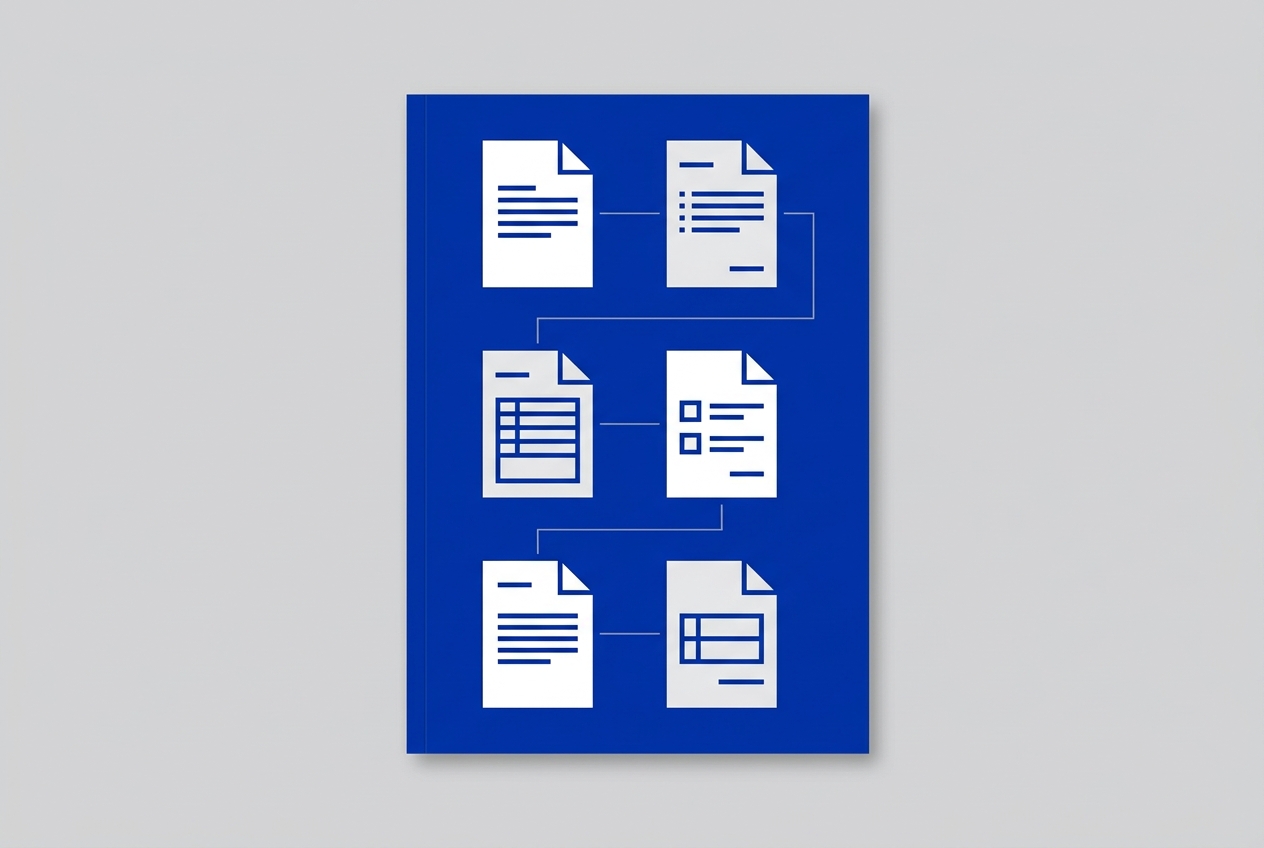
Customer arrives → Check-In & Authorization → Vehicle Condition → Technician Inspection → Additional Authorization → Customer Communication → Final Quality Control → Comeback Review (when necessary).
That's the beginning of a service operating system. And that's where a small five-technician department can have an advantage over a much larger operation. You don't need six committees and three months of meetings to change a process. You can sit down with your team tomorrow morning and say: “From now on, these are the seven points we document the same way every time.” Simple. Repeatable. Trainable. Measurable.
The CDOS principle
The goal isn't more paperwork. The goal is fewer things left to memory.
- When somebody asks what are we trying to accomplish? — that's the Process.
- When somebody asks how do we do it? — that's the Procedure.
- When somebody asks what do I use? — that's the Reference.
Process → Procedure → Reference. That's how a five-technician shop begins operating like a much larger organization — without becoming one.
How many of these seven processes are standardized in your service department today?
CDOS gives dealership managers practical processes, procedures and references for the situations they face every day — from Service and Parts to HR, Safety, Collision, Compliance and Management. Don't search through folders when something happens. Ask the problem. Find the process. Follow the procedure. Use the right reference.
Get the actual dealership forms behind this article — claim any 3 free, no card needed.